The Warm, Creamy, Golden-Topped Baked Noodle Pudding That Has Graced Jewish Holiday Tables for Generations
There are certain dishes that do more than simply feed you — they transport you. One forkful of a perfectly baked Cinnamon Kugel and you are instantly somewhere warm and familiar, surrounded by the scent of cinnamon and vanilla drifting through a kitchen, the sound of family gathering around a table set for a holiday meal. Kugel is one of those deeply emotional foods, the kind that carries memory and meaning in every single bite. It is humble in its ingredients yet extraordinary in its comfort, simple in its preparation yet remarkable in its results.
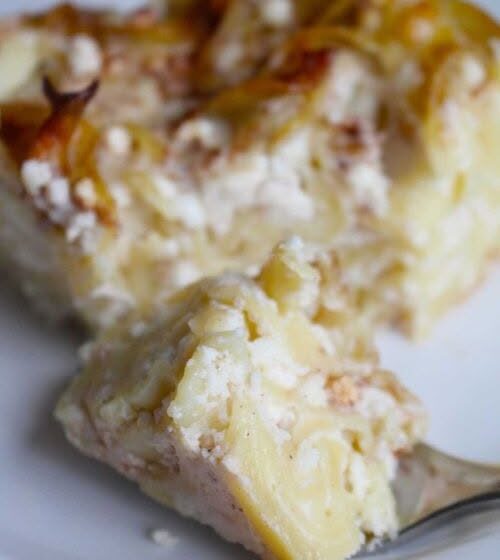
At its heart, Cinnamon Kugel is a baked noodle pudding — egg noodles suspended in a rich, silky custard of eggs, whole milk, sour cream, and sugar, lightly spiced with warm cinnamon and pure vanilla extract, then baked until the center is soft and custardy and the top is gloriously golden with a lightly crisp, caramelized crust. It occupies that wonderful, rare space between a side dish and a dessert, between everyday comfort food and special occasion showstopper. It belongs on a Rosh Hashanah table just as naturally as it belongs on a lazy Sunday brunch spread.
In this complete guide, we will walk you through everything — the cultural history of kugel, every ingredient and why it matters, a detailed step-by-step method with professional tips woven throughout, and answers to every question you could possibly have before you attempt this recipe for the first time or the fiftieth.
🍮 Why This Kugel Will Become Your Most-Requested Recipe
- 🌟 The Ultimate Comfort Food: There is simply nothing quite like pulling a bubbling, golden kugel out of the oven. The aroma of cinnamon and vanilla that fills the kitchen the moment it starts baking is worth making this recipe for that reason alone.
- 🎉 Perfect for Every Occasion: Whether you are serving it as a sweet side dish at a holiday dinner, a centerpiece at a weekend brunch, or a comforting dessert after a family meal, this kugel fits every table and every occasion beautifully.
- ⏱️ Make-Ahead Friendly: One of this recipe’s greatest practical strengths is that you can assemble the entire dish the night before and simply slide it into the oven when you need it. For anyone who entertains regularly, this is an absolute game-changer.
- 👨👩👧👦 Universally Loved: Sweet, creamy, lightly spiced, and with that irresistible golden crust — this is a dish that children and adults, picky eaters and adventurous ones, all reach for seconds of without hesitation.
- 🔄 Beautifully Versatile: The base recipe is wonderful on its own, but it serves as an excellent canvas for your own personal touches — raisins, walnuts, a pinch of nutmeg, a drizzle of honey, or a handful of fresh berries folded in before baking.
- 🕐 Leftovers That Are Just as Wonderful: Unlike many baked dishes that lose their magic the next day, Cinnamon Kugel reheats beautifully and tastes just as good — many people argue even better — on day two and three.
📖 The Rich History and Cultural Significance of Kugel
To truly appreciate Kugel, you need to understand where it comes from and what it represents. The word Kugel comes from the Middle High German word for “ball” or “globe,” a reference to the round pot in which the earliest versions of this dish were cooked — nestled directly inside a pot of cholent, the slow-cooked Sabbath stew, absorbing heat and flavor over many hours. Those earliest kugels, dating back to medieval Ashkenazi Jewish communities in Germany and Eastern Europe, were made from bread or flour and were entirely savory, bearing little resemblance to the sweet, noodle-based versions we know and love today.
Over centuries of migration, adaptation, and culinary creativity, kugel evolved dramatically. As egg noodles became widely available and affordable in Eastern European Jewish communities, noodle kugel — or lokshen kugel, using the Yiddish word for noodles — became the dominant form. Eggs and dairy were gradually incorporated, transforming the dish from a simple starchy side into the rich, custardy, pudding-like creation it is today. The addition of cinnamon, sugar, and vanilla pushed it firmly into sweet territory, making it the beloved dessert-side hybrid that generations of Jewish families have served at Shabbat dinners, Rosh Hashanah celebrations, Passover tables, and every holiday gathering in between.
Today, Kugel is much more than a recipe — it is a living piece of cultural heritage, a tangible connection to ancestors and traditions, a dish that has survived centuries of history and continues to be passed down through family recipe cards, handwritten notes, and cherished memories.
🛒 What You Will Need
🍝 The Noodle Base
- 12 oz egg noodles — the classic and traditional choice for kugel. Wide egg noodles work best as their flat, ribbon-like shape holds the custard beautifully and creates a wonderful layered texture in the finished dish. Do not substitute with regular pasta — the egg content in egg noodles is a key part of the flavor and texture of an authentic kugel.
🥛 The Custard Base
- 4 large eggs — the structural backbone of the entire dish. The eggs bind everything together, set the custard during baking, and give the kugel its characteristic firm-yet-yielding, pudding-like interior texture.
- 2 cups whole milk — full-fat whole milk is non-negotiable here if you want the richest, creamiest result. Reduced-fat milk will give you a thinner, less satisfying custard that lacks the luxurious mouthfeel of the real thing.
- 1 cup sour cream or full-fat Greek yogurt — this is the secret ingredient that elevates this kugel above all others. Sour cream adds an incredible richness and a very subtle, barely-there tanginess that perfectly balances the sweetness of the sugar and creates a custard with extraordinary depth and complexity.
🍬 The Sweeteners and Spices
- ¾ cup granulated sugar — provides the primary sweetness and helps the top of the kugel caramelize into that beautiful golden crust during baking.
- ¼ cup brown sugar — the molasses content in brown sugar adds a warm, caramel-like depth to the sweetness that granulated sugar alone simply cannot provide. It is a small addition that makes a noticeable difference.
- 2 teaspoons ground cinnamon — the defining flavor of this entire recipe. Use the freshest, most fragrant ground cinnamon you can find — Ceylon cinnamon, sometimes called “true cinnamon,” is particularly wonderful here for its sweeter, more floral character.
- 1 teaspoon pure vanilla extract — rounds out all the warm spice flavors and adds a layer of aromatic sweetness that makes the whole custard smell and taste irresistible.
- ½ teaspoon salt — do not skip this. Salt in a sweet recipe does not make things taste salty; it makes them taste more intensely of themselves, amplifying the cinnamon, vanilla, and sweetness to their full potential.
🧈 The Finishing Touch
- 4 tablespoons unsalted butter, melted — drizzled over the top before baking, the butter bastes the surface of the kugel as it bakes, creating that deeply golden, slightly crispy, almost caramelized top crust that is arguably the best part of the entire dish.
🍇 The Optional Mix-Ins
- ½ cup raisins — a classic and traditional addition that plumps up beautifully in the custard during baking, bursting with concentrated sweetness in occasional bites throughout the finished kugel.
- ¼ cup chopped walnuts or pecans — adds a gentle crunch and a nutty, toasty flavor that contrasts wonderfully with the soft, creamy interior of the kugel.
✨ The Cinnamon Sugar Topping
- 1 tablespoon sugar + 1 teaspoon cinnamon — combined and sprinkled over the top of the assembled kugel just before it goes into the oven. This simple mixture creates a thin, lightly crunchy, sparkling crust on top that is visually beautiful and texturally magnificent.
👨🍳 How to Make It — Complete Step-by-Step Method
Prep time: 20 minutes | Bake time: 45–55 minutes | Rest time: 15 minutes | Total time: approximately 1 hour 30 minutes | Servings: 12 generous portions
Step 1: Cook the Noodles
Bring a large pot of generously salted water to a rolling boil and cook your egg noodles according to the package instructions, but pull them out about one to two minutes before they reach the fully tender stage — you want them slightly underdone, with just a hint of firmness still in the center. This is critically important: the noodles will continue cooking inside the hot custard as the kugel bakes in the oven, and if they are already fully cooked before they go in, they will become mushy and lose all their textural integrity by the time the kugel is done. Drain the noodles thoroughly in a colander, shake out as much water as possible, and set aside. 💡 Pro Tip: Toss the drained noodles with about a teaspoon of butter or neutral oil immediately after draining to prevent them from clumping together into a solid mass while you prepare the rest of the recipe.
Step 2: Prepare the Custard Base
In a very large mixing bowl — large enough to eventually hold the noodles as well — crack in all four eggs and whisk them briefly until the yolks and whites are fully combined. Add the whole milk, sour cream, granulated sugar, brown sugar, ground cinnamon, vanilla extract, and salt. Whisk everything together vigorously and thoroughly for a full minute until the mixture is completely smooth, uniformly combined, and free of any lumps of sour cream or streaks of unmixed egg. The finished custard should have a beautiful pale amber color from the brown sugar and cinnamon, and it should smell absolutely heavenly — warm, spiced, and sweet.
Step 3: Combine the Noodles with the Custard
Add the drained, slightly cooled egg noodles to the bowl of custard and stir gently but thoroughly with a large spoon or spatula, making sure that every noodle is evenly coated in the custard mixture. If you are using raisins, add them now and fold them gently through the noodle mixture. If using chopped walnuts or pecans, fold those in as well. Let the noodle and custard mixture sit together for about 5 minutes — this brief resting period allows the noodles to begin absorbing the custard slightly, which results in a more cohesive, unified texture in the final baked kugel.
Step 4: Prepare Your Baking Dish and Preheat the Oven
Position a rack in the center of your oven and preheat to 350°F (175°C). While the oven heats, generously grease a 9×13 inch baking dish with softened butter, making sure to coat the bottom and all four sides thoroughly. A well-greased pan ensures that the kugel releases cleanly when you cut and serve it, and the butter on the pan sides contributes to the beautifully golden, slightly crispy edges that everyone always fights over.
Step 5: Assemble and Top the Kugel
Pour the noodle and custard mixture into your prepared baking dish and use the back of your spoon or a spatula to spread it into an even, level layer. In a small bowl, combine the tablespoon of sugar with the teaspoon of cinnamon for the topping and stir to combine. Sprinkle this cinnamon sugar mixture evenly over the entire surface of the kugel, covering it from edge to edge. Finally, drizzle the four tablespoons of melted butter slowly and evenly over the top. As it bakes, this butter will combine with the cinnamon sugar to form an extraordinary golden, lightly caramelized crust that is deeply fragrant, slightly crisp, and absolutely beautiful.
Step 6: Bake to Golden Perfection
Slide the baking dish into the center of your preheated oven and bake for 45 to 55 minutes. At the 45-minute mark, check the kugel by gently shaking the pan — the center should be mostly set with just a very slight, gentle wobble, similar to a fully baked cheesecake. The top should be a deep, burnished golden brown with edges that have pulled away very slightly from the sides of the pan and turned slightly crispy. If the top is browning too quickly before the center is set, loosely tent a piece of aluminum foil over the dish and continue baking until done. 💡 Pro Tip: Every oven behaves differently. Start checking at 45 minutes and trust your eyes and the shake test rather than relying solely on the timer. An overbaked kugel will be dry and rubbery; a perfectly baked one will be set but still luxuriously creamy inside.
Step 7: Rest, Slice, and Serve
Remove the kugel from the oven and resist every temptation to cut into it immediately. Let it rest on a wire rack or heat-safe surface for 10 to 15 minutes before slicing. During this resting period, the custard continues to set and firm up considerably, transforming the kugel from a soft, barely-set pudding into something that holds its shape cleanly when cut into neat squares. Serve warm, with a light dusting of extra cinnamon if desired, and watch it disappear from the table in minutes.
💡 Expert Tips for the Perfect Kugel Every Single Time
- 🥚 Room Temperature Dairy Makes a Difference: Take your eggs, milk, and sour cream out of the refrigerator about 30 minutes before you begin. Room temperature dairy ingredients blend together far more smoothly and create a more cohesive, lump-free custard than cold ingredients straight from the fridge.
- 🛑 Never Overbake: The single most common mistake with kugel is leaving it in the oven too long. Pull it out when the center still has the faintest wobble — it will finish setting during the resting period and reward you with a gloriously creamy interior.
- 🌿 A Pinch of Nutmeg Changes Everything: Adding just ¼ teaspoon of freshly grated nutmeg to the custard alongside the cinnamon introduces a warm, aromatic complexity that makes the spice profile noticeably more interesting and sophisticated.
- 🍯 Drizzle with Honey Before Serving: A light drizzle of good quality honey over individual portions just before serving adds a floral sweetness and a beautiful glossy appearance that elevates the presentation dramatically.
- ❄️ Make It the Night Before: Assemble the entire kugel — noodles, custard, topping, and butter — cover tightly with plastic wrap, and refrigerate overnight. The next day, bring it to room temperature for 30 minutes and bake as directed. The overnight rest allows the noodles to absorb even more of the custard, resulting in a richer, more unified, more deeply flavored final dish.
❓ Frequently Asked Questions
Can I make this recipe dairy-free? Yes, with some adjustments. Substitute the whole milk with full-fat canned coconut milk for a rich, creamy result with a subtle coconut undertone. Replace the sour cream with a dairy-free coconut yogurt or cashew cream, and use melted coconut oil in place of the butter. The flavor profile will be slightly different but still deeply delicious.
My kugel came out too wet and did not set properly — what went wrong? The most likely culprit is noodles that were not drained thoroughly enough, introducing excess water into the custard. Always shake the colander vigorously and let the noodles drain for a full two to three minutes before adding them to the custard. Another possible cause is underbaking — make sure the center is fully set before removing from the oven.
Can I freeze Cinnamon Kugel? Yes, kugel freezes remarkably well. Allow it to cool completely, then cut it into individual portions, wrap each piece tightly in plastic wrap followed by a layer of aluminum foil, and freeze for up to two months. Reheat directly from frozen in a 325°F oven for about 20 to 25 minutes, or thaw overnight in the refrigerator and reheat gently.
What is the difference between sweet kugel and savory kugel? Sweet kugel, like this recipe, uses sugar, cinnamon, vanilla, and often raisins to create a dessert-like or sweet side dish profile. Savory kugel — a completely different but equally traditional preparation — reduces or eliminates the sugar, adds a generous amount of salt, and incorporates sautéed onions, black pepper, and sometimes schmaltz (rendered chicken fat) for a deeply savory, onion-forward flavor that is traditionally served alongside meat dishes.
How do I store and reheat leftovers? Store leftover kugel covered tightly in the refrigerator for up to three to four days. To reheat, place individual squares in a 325°F oven for 10 to 15 minutes until warmed through — this method restores the crispy top far better than a microwave, which will soften the crust. If reheating in a microwave, use 50% power in short 30-second bursts to avoid making the texture rubbery.