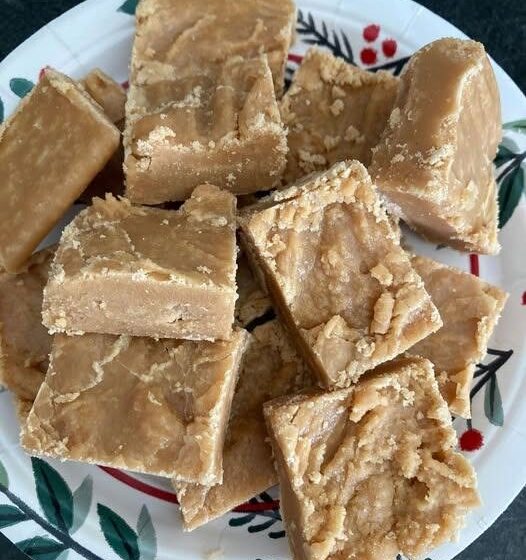
If you’ve never tried Traditional Scottish Tablet, you’re in for a very special treat. At first glance, it may look a little like fudge, but one bite reveals that Scottish tablet is something completely different. It’s firm and crumbly, slightly grainy, intensely sweet, buttery, and wonderfully rich. When made correctly, it has a delicate sugary texture that melts in your mouth while still giving you that satisfying bite.
Scottish tablet is a beloved traditional sweet in Scotland and is often enjoyed with a cup of tea or coffee. It’s also a wonderful homemade candy recipe for holidays, afternoon tea, family gatherings, and edible gifts.
The recipe uses simple ingredients—granulated sugar, whole milk, sweetened condensed milk, butter, and vanilla—but the technique is what creates its distinctive texture. The mixture is cooked carefully and then vigorously beaten as it cools. This encourages tiny sugar crystals to form, giving authentic tablet its characteristic crumbly texture.
What Is Scottish Tablet?
Scottish tablet is a traditional Scottish confection that sits somewhere between fudge and hard candy.
Unlike American-style fudge, which is generally smooth and creamy, tablet is firmer and more crystalline. It breaks into pieces rather than bending or stretching, and it has a wonderfully rich, buttery flavor.
The slightly grainy texture isn’t a mistake—it’s actually one of the things that makes authentic Scottish tablet so special.
Because it is extremely sweet and rich, small squares are all you need. Serve them with strong black tea or coffee for a delicious afternoon treat.
Ingredients
For this traditional homemade tablet, you’ll need:
- 4½ cups granulated white sugar
- 1 cup whole milk
- 1 can (14 ounces) sweetened condensed milk
- 6 tablespoons salted butter
- 1 teaspoon vanilla extract
- Pinch of salt, optional
You can also use unsalted butter and add a small pinch of salt yourself.
How to Make Traditional Scottish Tablet
1. Prepare the Pan
Line a 9×13-inch baking pan with parchment paper.
Leave some parchment extending over the edges so you can easily lift the finished tablet from the pan.
Lightly butter the parchment.
2. Combine the Ingredients
Place the sugar, whole milk, condensed milk, and butter into a large, heavy-bottomed saucepan.
A large saucepan is important because the mixture becomes extremely hot and can bubble vigorously while cooking.
Heat over low to medium heat, stirring gently until the butter melts and the sugar dissolves.
3. Cook the Mixture
Once the sugar has dissolved, gradually increase the heat and bring the mixture to a steady boil.
Continue cooking while stirring frequently.
The mixture will become thicker and darker as it cooks.
A candy thermometer is highly recommended. Cook until the mixture reaches approximately 236–240°F (113–116°C).
Be extremely careful because hot sugar can cause serious burns.
4. Add the Vanilla
Remove the saucepan from the heat.
Stir in the vanilla extract and a small pinch of salt if desired.
The vanilla adds a warm flavor that balances the intense sweetness.
5. Beat the Mixture
This is the most important step in making Scottish tablet.
Allow the mixture to cool slightly, then beat it vigorously with a sturdy wooden spoon or suitable electric mixer.
Continue beating until the mixture becomes noticeably thicker and begins to lose its glossy appearance.
This vigorous beating encourages the formation of tiny sugar crystals.
Those crystals create the distinctive crumbly Scottish tablet texture.
6. Pour Into the Pan
Immediately pour the thickened mixture into the prepared pan.
Use a spatula to spread it evenly.
Work fairly quickly because tablet begins setting as soon as it cools.
7. Score the Squares
Allow the tablet to cool for several minutes.
Before it becomes completely hard, score the surface into squares or rectangles using a sharp knife.
Don’t wait until it’s completely set, because cutting it then can cause the pieces to crack unevenly.
8. Cool Completely
Allow the tablet to cool completely at room temperature.
Once firm, lift it from the pan using the parchment paper.
Break or cut it along the scored lines and serve.
Tips for Perfect Scottish Tablet
Use a heavy-bottomed saucepan. It helps distribute heat evenly and reduces the risk of burning.
Don’t rush the cooking process. Properly dissolving the sugar helps create a better texture.
Use a candy thermometer. Getting the temperature right is one of the easiest ways to achieve consistent results.
Beat thoroughly. The final beating stage is essential for developing those fine sugar crystals.
Don’t overbeat. Once the mixture becomes thick and loses its glossy appearance, transfer it to the pan.
Work quickly. Tablet sets relatively quickly once it begins cooling.
Score before completely firm. This makes cutting much easier.
Why Does Scottish Tablet Have a Grainy Texture?
The grainy texture is intentional.
Scottish tablet is made through controlled sugar crystallization. During the final beating stage, numerous small sugar crystals develop throughout the mixture.
The goal is to create fine crystals, rather than large, gritty crystals.
That’s why vigorous beating at the correct stage is so important.
If you are expecting smooth fudge, the texture may initially surprise you. But once you taste properly made tablet, you’ll understand why this traditional texture is part of its appeal.
Scottish Tablet vs. Fudge
Although the two sweets look similar, they’re quite different.
Scottish tablet is firm, crumbly, crystalline, and exceptionally sweet.
Fudge is generally smoother, softer, and creamier.
Tablet also has a characteristic “snap” when broken, followed by a texture that quickly melts in your mouth.
Delicious Variations
Vanilla Tablet
Keep things classic with plenty of good-quality vanilla extract.
Chocolate Scottish Tablet
Add cocoa powder or melted chocolate for a richer chocolate version.
Orange Tablet
Add finely grated orange zest for a bright citrus flavor.
Coffee Tablet
Mix a little instant espresso powder into the cooked mixture for a sophisticated coffee-flavored candy.
Whisky Tablet
For an adult-inspired version, a small amount of Scotch whisky can be incorporated after cooking. Add it carefully because the hot mixture may bubble.
How to Serve Scottish Tablet
Because tablet is so rich, small pieces are perfect.
Serve it with:
- Black tea
- Earl Grey tea
- Coffee
- Espresso
- Cappuccino
- Hot chocolate
It also makes a beautiful addition to a Christmas dessert table or homemade candy gift box.
For gifting, wrap individual pieces in parchment paper or place them in a decorative airtight container.
How to Store Scottish Tablet
Store tablet in an airtight container at room temperature in a cool, dry place.
Place parchment paper between layers if you’re stacking the pieces.
Avoid humid environments because moisture can affect the texture and make the tablet sticky.
Properly stored tablet can keep for quite a while, making it an excellent make-ahead dessert and homemade food gift.
Frequently Asked Questions
Is Scottish tablet the same as fudge?
No. Scottish tablet is firmer and more crystalline, while fudge is generally smooth and creamy.
Why didn’t my tablet set?
The sugar mixture may not have reached the proper temperature. Cooking it with a candy thermometer can help prevent this problem.
Why is my tablet too hard?
It may have been cooked beyond the desired temperature. Even a small temperature difference can significantly affect the final texture of cooked sugar.
Why is my tablet too soft?
The mixture may not have been cooked long enough, or it may not have reached the correct temperature.
Can I make tablet without condensed milk?
Yes. There are many traditional Scottish tablet recipes with slightly different ingredient combinations. This version uses sweetened condensed milk for convenience and richness.
Can I freeze Scottish tablet?
Yes, tablet can be wrapped tightly and frozen. Allow it to return to room temperature before serving.
A Sweet Taste of Scotland
Traditional Scottish Tablet is a wonderful example of old-fashioned cooking at its best. A few basic ingredients are transformed into a rich, buttery confection with a texture unlike ordinary fudge or candy.
The key is patience. Cook the sugar mixture carefully, reach the correct temperature, and then give it a vigorous beating to create the tiny crystals responsible for its classic texture.
Whether you’re making it for Christmas baking, afternoon tea, a family celebration, or simply because you’re craving an old-fashioned homemade sweet, Scottish tablet is well worth the effort.
Cut it into small squares, make yourself a cup of tea, and enjoy this wonderfully rich taste of Scottish tradition.

